

Researchers leverage the transition from solid to gas phase to produce drug formulations with high solubility
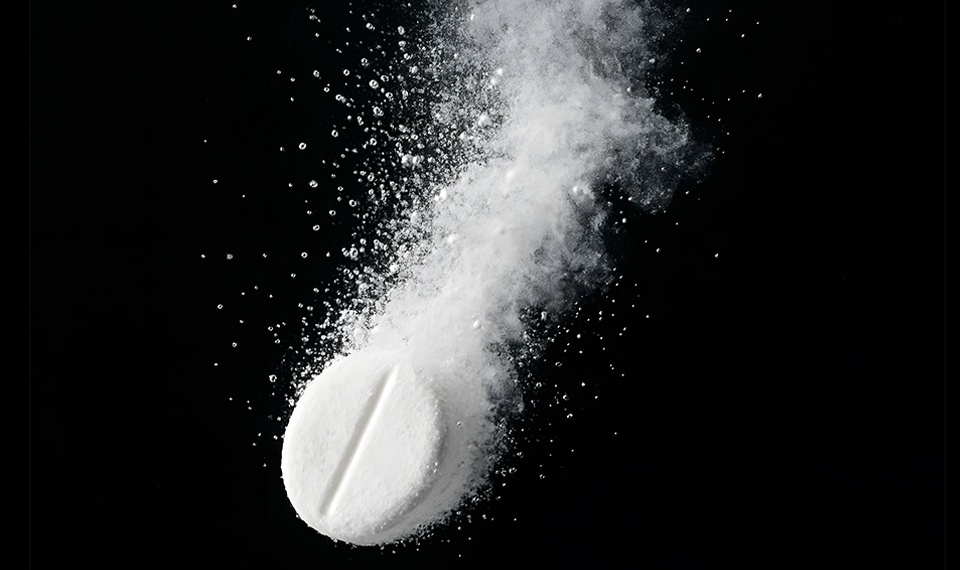
A large share of medicines developed today may never reach patients for a surprisingly simple reason: they cannot dissolve well enough in water. For most treatments, the oral route remains the gold standard because it is convenient and familiar. However, for a pill to work, its active ingredients must first dissolve in the fluids of the gastrointestinal tract before they can be absorbed into the bloodstream. If a drug dissolves too slowly or incompletely, its therapeutic effect can be compromised. This so-called ‘solubility crisis’ has become one of the main bottlenecks in modern drug development, affecting as much as 90% of active compounds currently under development.
To overcome this issue, pharmaceutical scientists often try to change the physical structure of drugs. Most drugs are naturally crystalline, meaning their molecules are arranged in a rigid arrangement that is difficult to break apart. Turning these crystals into an amorphous form, in which the molecules are disordered, is an effective way to increase drug solubility in water. In practice, this can be achieved via the evaporation/condensation (EV) method, where drug molecules are adsorbed onto porous materials like mesoporous silica (MPS) to prevent them from re-crystallizing. However, the EV method requires dissolving the drug in potent organic solvents first, raising health and environmental concerns.
Seeking a more sustainable alternative, a research team led by Professor Takehisa Hanawa from the Faculty of Pharmaceutical Sciences, Tokyo University of Science (TUS), Japan, investigated an organic solvent-free approach to load drugs into MPS. In their latest paper, made available online on December 24, 2025, and published in Volume 115, Issue 2 of the Journal of Pharmaceutical Sciences on February 1, 2026, the team dives into the sealed heating (SH) method, a process that bypasses liquid chemicals entirely by using the gas phase. This work was co-authored by Yayoi Kono, former Adjunct Lecturer at TUS and currently Professor at Nagoya City University; Kaori Hirose, former Adjunct Assistant Professor at TUS; Tomohiro Ozawa, former Adjunct Assistant Professor at TUS; Kazuya Nomura, 2021 Master’s Program Graduate at TUS; and Mr. Nobuyuki Natori and Dr. Takuma Oba from the Formulation Department, CMC Center, Kaken Pharmaceutical Co., Ltd.
In the SH method, a solid mixture of MPS and a drug in powder form is placed in a gently heated vacuum container. The drug must be able to transition directly from solid to gas under these conditions through a physical process known as ‘sublimation.’ Once in gaseous form, the drug molecules can adsorb onto the internal surfaces of the silica pores and remain in an amorphous state, boosting their solubility.
Using ibuprofen as a representative drug compound with sublimation properties, the researchers compared the SH approach with both simple physical mixing and the conventional EV method. They employed advanced analytical techniques to track changes in crystallinity, pore structure, and molecular interactions between the drug and MPS.
The results showed that SH was highly effective under the optimal conditions, matching the performance of EV-prepared samples. Ibuprofen adsorbed onto MPS became completely amorphous at low-to-moderate drug loadings, especially when silica with a larger pore volume was used. Most importantly, dissolution tests revealed that these optimal MPS formulations released ibuprofen 2.7 times faster than the original crystalline drug within the first 10 minutes. Chemical analyses also confirmed that the ibuprofen molecules remained intact and that no unwanted chemical reactions occurred with the MPS carrier.
Taken together, these findings position the SH method as a promising solution to the solubility crisis in drug development. Beyond performance, the environmental advantages of the approach also stand out, as Prof. Hanawa remarks, “The fact that pharmaceuticals can be loaded onto MPS directly via the gas phase makes the SH method an environmentally friendly and safe drug loading technique that does not require the use of organic solvents.” This solvent-free aspect could also simplify pharmaceutical manufacturing steps and reduce cost and regulatory burdens.
The research team also sees broader potential for this innovative technique. Because the process relies on physical adsorption rather than chemical bonding, it may be possible to load more than one drug onto the same carrier. “By further adsorbing other pharmaceuticals onto MPS carrier-based compounds, we believe the proposed method could also be used to manufacture combination drugs,” explains Prof. Hanawa. The proposed method could also be used in loading anti-inflammatory drugs such as para-hydroxybenzoic acids, mefenamic acid, etenzamide, flufenamic acid, and aspirin. Furthermore, this method could be utilized by companies handling porous materials and in MPS manufacturing units.
While the SH method is limited to drugs that can sublime, this study demonstrates a promising new direction for pharmaceutical technologies, offering a cleaner and simpler way of turning promising drug molecules into effective medicines in the near future.
