

Researchers from RMIT University have developed a wearable wound monitoring device with integrated sensors that could reduce infection risks by minimising the need for frequent physical contact.
Standard methods require regular removal of wound dressings for assessments, often delaying crucial interventions, whereas this invention monitors healing remotely via a Bluetooth connection.
The proof-of-concept device is designed for reuse, making it more cost-effective and practical than disposable smart bandages and other emerging wound monitoring technologies.
Globally, millions of people suffer from chronic wounds, impacting their quality of life and incurring significant healthcare costs. In Australia, about 500,000 people are affected, costing the healthcare system $3 billion annually.
Lead inventor Dr. Peter Francis Mathew Elango said the device used advanced integrated sensor technology – including inflammation, pH and temperature sensors – to continuously track key healing indicators. High temperatures signal inflammation or infection, while changes in pH levels can indicate different stages of wound healing.
“We tested our wound monitoring device by simulating conditions it would encounter in wound management. We placed the device on a human arm to demonstrate that it conforms well to the curved surface,” said Elango, from the School of Engineering.
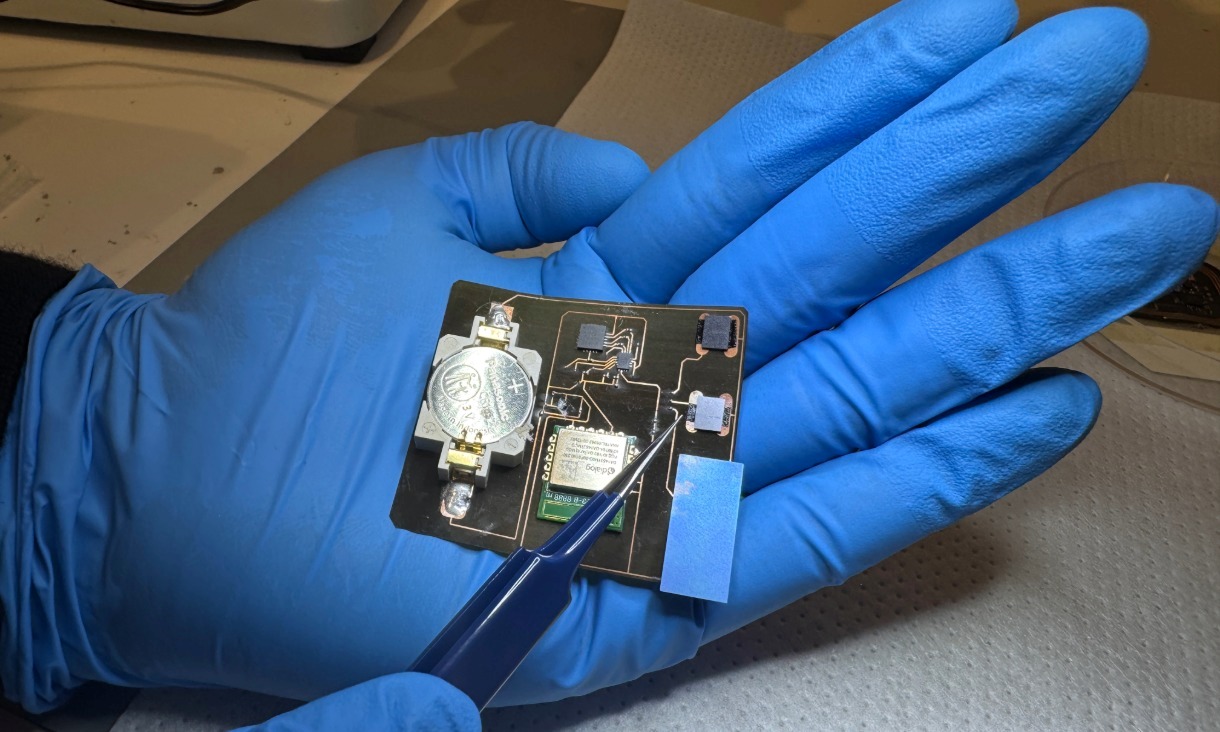
“This was a test to show that this type of alternative monitoring technology is possible, and we are now ready to work with industry partners to develop it for clinical trials.
“Its components are biocompatible and fit seamlessly into existing manufacturing workflows and processes, potentially bringing the cost below $5 per unit when produced at scale.”
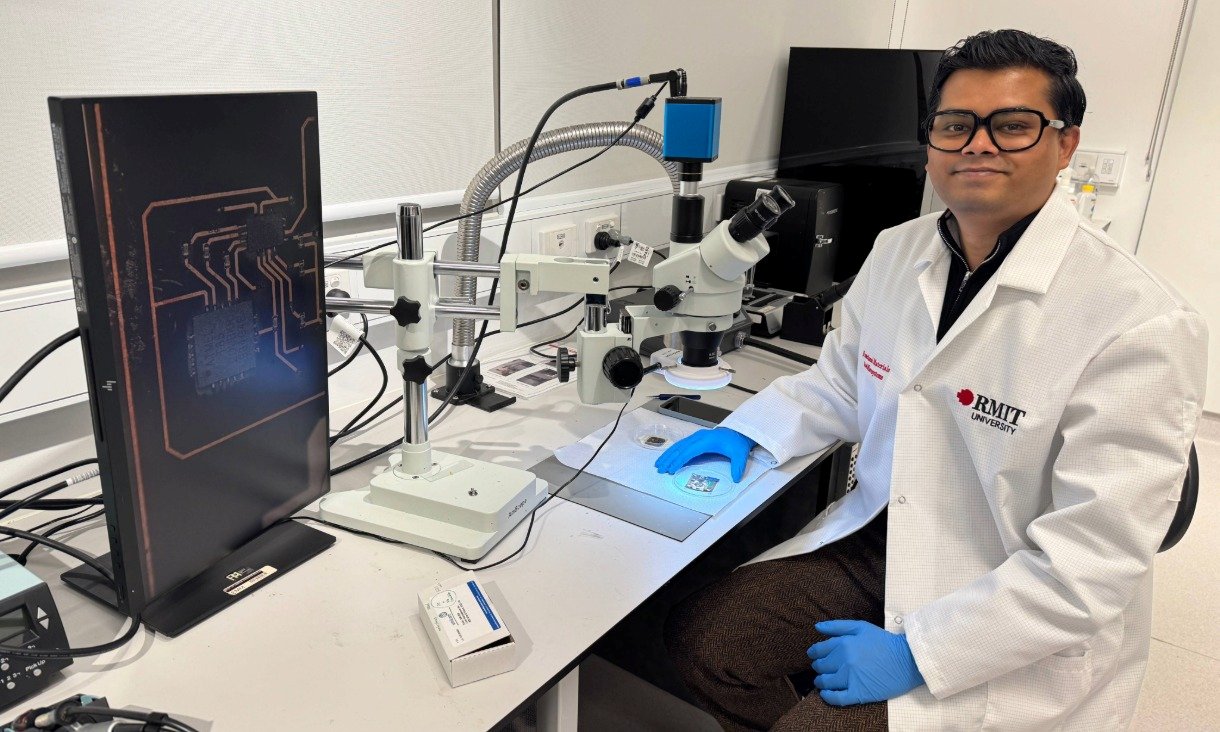
An RMIT-patented technology platform underpins this innovation, with flexible sensors that can be placed on or next to a wound under dressings.
“The high-resistivity silicon-based sensor technology is our platform IP that has been proven to be efficient at multiple biomarker detection related to different ailments,” said team leader Professor Madhu Bhaskaran.
