

Preclinical studies demonstrate measurable systemic semaglutide exposure following oral administration; granted claims cover semaglutide and multiple GLP-1 receptor agonists.
BioLife today announced that the United States Patent and Trademark Office has granted U.S. Patent 12,667,605 B2 for its novel effervescent oral peptide delivery technology, designed to support current and future peptide therapeutics for obesity, diabetes and metabolic disease.
The announcement comes as demand for GLP-1 medicines continues to accelerate. GLP-1 therapies generated approximately $132 billion in global sales in 2025, while obesity medicines now represent an estimated $42 billion market.1 As more patients seek alternatives to injections, demand for alternative oral treatments continues to grow.
First generation oral GLP-1 medicines have demonstrated the value of oral administration while also underscoring on the fundamental challenges in peptide drug development: protecting large peptide molecules as they move through the gastrointestinal tract.
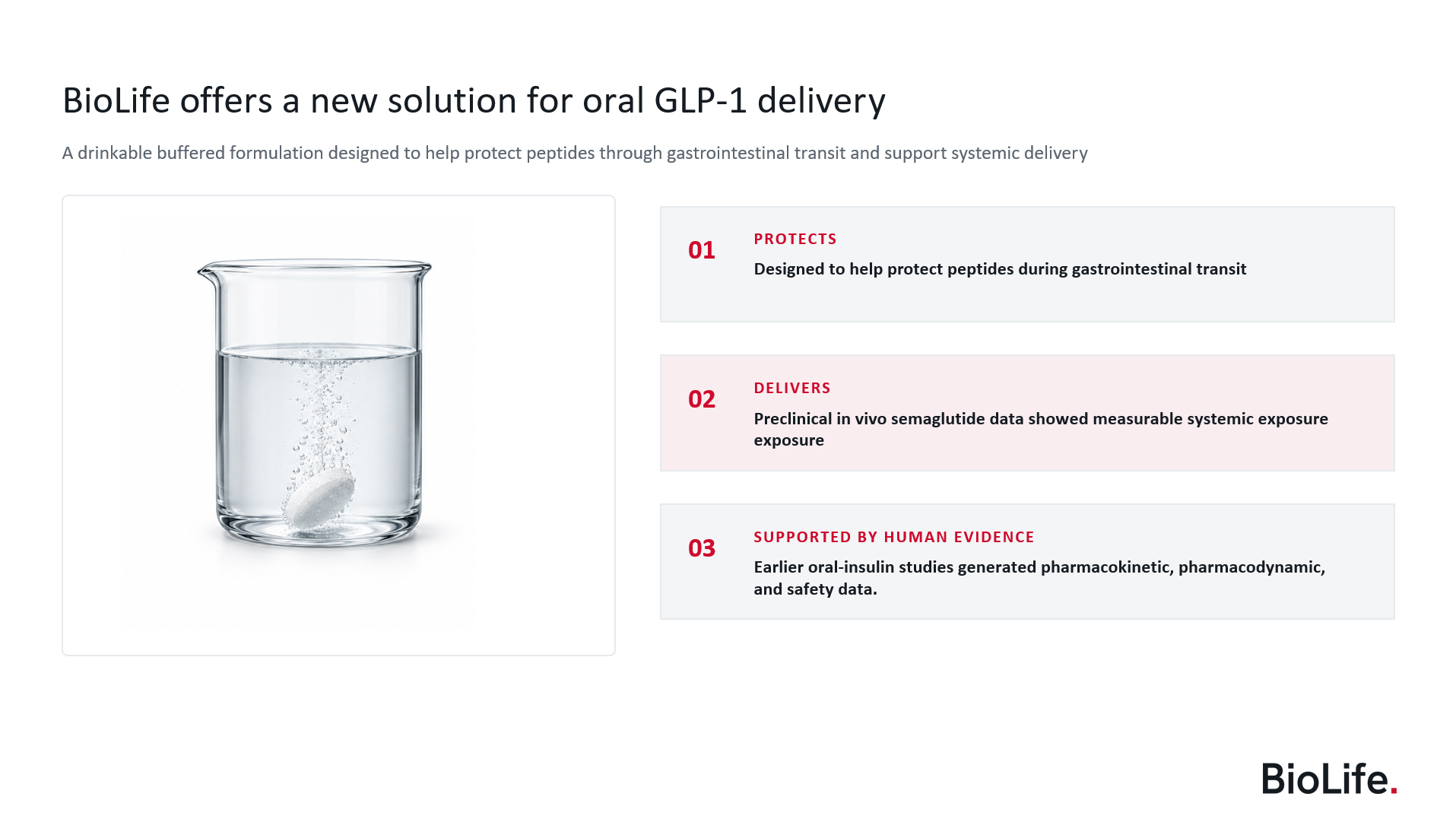
BioLife’s unique technology was developed to explore what comes next. Built on more than 35 years of pharmaceutical effervescence expertise, this novel approach to oral peptide delivery uses a dissolvable effervescent tablet format that creates a first-of-its-kind gastric buffer designed to help protect peptide therapeutics through the digestive system and support their absorption.
“GLP-1 medicines have changed how obesity and metabolic disease are treated, but we still need better oral options,” said Dr. Farid Bennis, Founder of BioLife and inventor of the technology known internally as OralMatrix, “This patent represents much more than protection for a formulation. It reflects decades of scientific work focused on addressing on the most important challenges in peptide medicine: helping these molecules pass through the digestive system intact, for today’s therapies and for future generations of peptide therapeutics. “
The technology takes a different approach to oral peptide drug delivery. Rather than relying on special coatings or absorption-enhancing ingredients, it uses a dissolvable effervescent format designed to help protect peptide medicines as they move through the digestive system.
Preclinical studies have demonstrated measurable systemic semaglutide exposure following oral administration, providing in vivo proof of concept for the approach. The granted U.S. claims extend across the GLP-1 class, including semaglutide, liraglutide, dulaglutide, albiglutide, exenatide and lixisenatide. Patent protection runs into 2042 with additional patent applications pending internationally.
Oral peptide drug delivery remains an important area of innovation as pharmaceutical companies evaluate increasingly sophisticated therapies for obesity, diabetes and metabolic disease. The opportunity extends beyond today’s GLP-1 medicines and toward future generations of peptide therapeutics.