

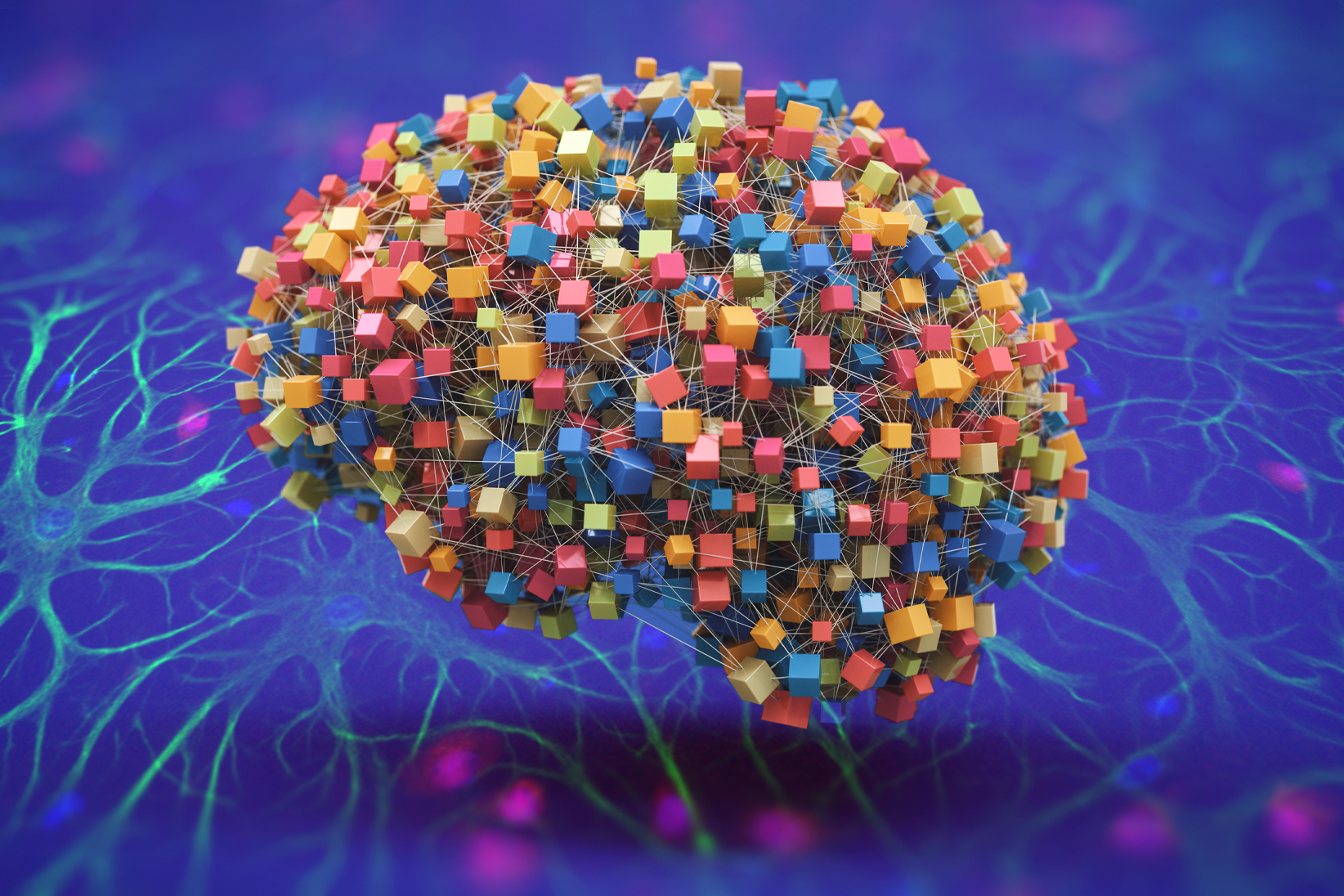
Researchers have demonstrated that brain cells learn faster and carry out complex networking more effectively than machine learning by comparing how both a Synthetic Biological Intelligence (SBI) system known as ‘DishBrain’ and state-of-the-art RL (reinforcement learning) algorithms react to certain stimuli.
The study, ‘Dynamic Network Plasticity and Sample Efficiency in Biological Neural Cultures: A Comparative Study with Deep Reinforcement Learning’, is the first known of its kind.
The research was led by Cortical Labs, the Melbourne-based startup which created the world’s first commercial biological computer, the CL1. The CL1, through which the research was conducted, fuses lab-cultivated neurons from human stem cells with hard silicon to create a more advanced and sustainable form of AI, known as “Synthetic Biological Intelligence” (SBI).
The research investigated the complex network dynamics of in vitro neural systems using DishBrain, which integrates live neural cultures with high-density multi-electrode arrays in real-time, closed-loop game environments. By embedding spiking activity into lower-dimensional spaces, the study distinguished between ‘Rest’ and ‘Gameplay’ conditions, revealing underlying patterns crucial for real-time monitoring and manipulation.
The analysis highlights dynamic changes in connectivity during Gameplay, underscoring the highly sample-efficient plasticity of these networks in response to stimuli. To explore whether this was meaningful in a broader context, researchers compared the learning efficiency of these biological systems with state-of-the-art deep RL algorithms such as DQN, A2C, and PPO in a Pong simulation.

In doing so, the researchers were able to introduce a meaningful comparison between biological neural systems and deep RL, concluding that when samples are limited to a real-world time course, even these very simple biological cultures outperformed deep RL algorithms across various game performance characteristics, implying a higher sample efficiency.
The research was led by Cortical Labs, in conjunction with the Turner Institute for Brain and Mental Health, Monash University, Clayton, Australia; IITB-Monash Research Academy, Mumbai, India; and the Wellcome Centre for Human Neuroimaging, University College London, United Kingdom.

Brett Kagan, Chief Scientific Officer at Cortical Labs, commented “While substantial advances have been made across the field of AI in recent years, we believe actual intelligence isn’t artificial. We believe actual intelligence is biological. In this research, we set out to investigate whether elementary biological learning systems achieve performance levels that can compete with state-of-the-art deep RL algorithms. The results so far have been very encouraging. Understanding how neural activity is linked to information processing, intelligence and eventually behaviour is a core goal of neuroscience research – this paper is an important and exciting step in that journey.
“This breakthrough was a critical proofpoint that led to the eventual creation of the CL1, the world’s first biological computer, to access these properties. However, this is the beginning of the journey, not the end. Through further research into Bioengineered Intelligence (BI) we believe we can unlock capabilities that far surpass anything demonstrated to date.”
Based on the original breakthrough, and the launch of the CL1, Cortical Labs has launched a second paper – ‘Two Roads Diverged: Pathways Towards Harnessing Intelligence in Neural Cell Cultures’ – proposing a novel approach to generating intelligent devices called Bioengineered Intelligence (BI).
Interest in using in vitro neural cell cultures embodied within structured information landscapes has rapidly grown. Whether for biomedical, basic science or information processing and intelligence applications, these systems hold significant potential. Currently, coordinated efforts have established the field of Organoid Intelligence (OI) as one pathway.
However, specifically engineering neural circuits could be leveraged to give rise to another pathway, which the paper proposes to be Bioengineered Intelligence (BI). The research paper examines the opportunities and prevailing challenges of OI and BI, proposing a framework for conceptualising these different approaches using in vitro neural cell cultures for information processing and intelligence.
In doing so, BI is formalised as a distinct innovative pathway that can progress in parallel with OI. Ultimately, it is proposed that while significant steps forward could be achieved with either pathway, the juxtaposition of results from each method will maximise progress in the most exciting, yet ethically sustainable, direction.
“Our goal was to go beyond anecdotal demonstrations of biological learning and provide rigorous, quantitative evidence that living neural networks exhibit rapid and adaptive reorganization in response to stimuli—capabilities that remain out of reach for even the most advanced deep reinforcement learning systems,” added Cortical Labs’ Forough Habibollahi. “While artificial agents often require millions of training steps to show improvement, these neural cultures adapt much faster, reorganizing their activity in response to feedback. By analyzing how their electrical signals evolved over time, we found clear patterns of learning and dynamic connectivity changes that mirror key principles of real brain function, demonstrating the potential of biological systems as fast, efficient learners.”
Cortical Labs’ Moein Khajehnejad added: “By converting high-dimensional spiking activity into interpretable, low-dimensional representations, we were able to uncover the internal plasticity and network reconfiguration patterns that accompany learning in biological neural cultures. These were not just statistical differences; they were real, functional reorganizations that paralleled improvements in task performance over time.
“What makes this study truly groundbreaking is that it’s the first to establish a head-to-head benchmark between synthetic biological systems and deep RL under equivalent sampling constraints. When opportunities to learn are limited, a condition closer to how animals and humans actually learn, these biological systems not only adapt faster but do so more efficiently and robustly. That’s an exciting and humbling result for the fields of AI and neuroscience alike.”
